

FICTION | SECHAGE | 2024 | 106 PAGES
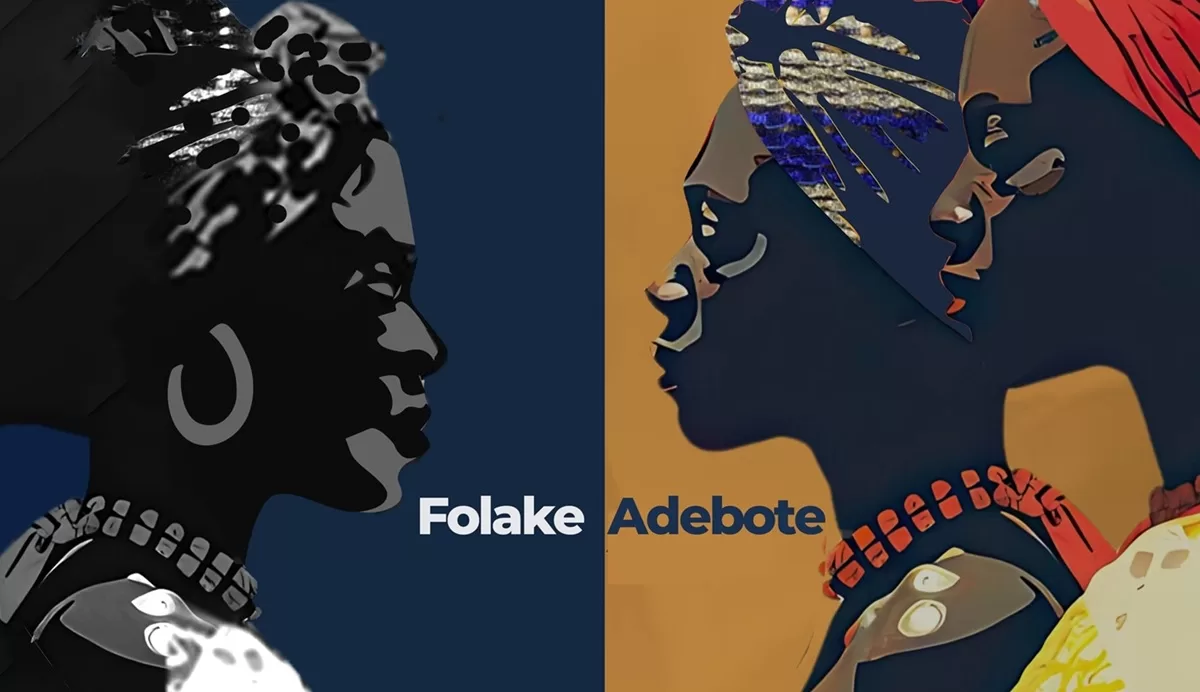
Folake Adebote’s The Ways We Fought is a 106-page novella, divided into seven parts: a prologue, five narrative sections that serve as chapters, and an epilogue. Each part is told in the third person from the narrative viewpoint of specific named characters. The work is not composed in a straightforward chronological order but stitched together through voices that sometimes crisscross. The book’s strength lies in its arrangement of voices, atmospheric quality, and poetic rhythm. Overall, the novella may be seen as a canvas of trauma, endurance, and interior resistance. It is the kind of book that does not raise its voice, yet lingers long after its final page.
Folake Adebote’s The Ways We Fought is a 106-page novella broken into seven parts: a prologue, five narrative sections that function as chapters of sorts, and an epilogue. Each part is told in the third person from the narrative viewpoint of specific named characters. The work is not composed in a straightforward chronological order but stitched together through voices that sometimes crisscross. The book’s strength lies in its arrangement of voices, atmospheric quality, and poetic rhythm. Overall, the novella may be seen as a canvas of trauma, endurance, and interior resistance. It is the kind of book that does not raise its voice, yet lingers long after its final page.
From its opening lines, the novel sets a mood of anticipation, captured in the very first sentence of the prologue: “What if babies can hear and understand us from birth, and their silence and soft babbling are a mere façade?” (1). Readers shift in their seats and prepare for a treat. In the next lines, they are plunged into what will become a major thread in the novel: motherhood, and the pains that accompany it, alongside African femininity. We are told: “It would mean they listened to the painful groaning of their mothers…” (1). The scene features one of the central characters around whom the novel is built, Fayemisi, whose mother is in the process of childbirth. She has twins, a boy and a girl, but loses the boy. There is a certain nonchalance towards the surviving girl and even a subtle wish that perhaps the boy should have been the one to live, if there had been a choice in the matter. This does not escape Fayemisi, who feels bad for her ‘new’ baby sister.
Even in these early pages, one notices a play with language, things said and unsaid, or poetics of silence that becomes a defining feature of Adebote’s work. Pain is evident across many pages and described in full as we encounter the troubles of the women around whom most of the five narrative viewpoints are built, namely: Fayemisi (5), Morounfolu (45 and 91), Salewa (71), and Moyin (alongside Kayode) (97).
In this light, one can say that structurally, the novel moves through three major parts, each named for and narrated by a different girl-woman: Fayemisi, Morounfolu, and Salewa. Their stories do not follow one another in a simple chronology but overlap, reflect, and revise. Fayemisi’s section, which follows the prologue, is the anchor on which the full narrative is built. We are introduced to her in the prologue as a six-year-old who witnesses her own birth and feels sorry for her baby sister. By the time we reach her section, she is a woman trying to become a traditional healer. Her voice is tentative, clouded with uncertainty and the debris of girlhood disrupted. However, she is a determined woman who defies her father and tradition, and soon finds her way, bringing change to the traditional healing industry.
Fayemisi’s journey from a misunderstood child to a determined apprentice, and finally a beloved midwife, is crafted with meticulous care. Adebote does not paint her heroine as a flawless martyr. She is stubborn, bold, at times reckless, but always burning with a hunger for knowledge and a desire for more than her world offers.
The next chapters shift to Fayemisi’s daughter, Morounfolu, around whom two sections of the book are centrally built. She is seen first as a quietly observant adolescent, raised by a family that holds only fragments of who she truly is. Through her gentle curiosity and growing self-awareness, we see the faint embers of Fayemisi’s spirit — an intuitive mind, a questioning gaze, a yearning for something unspoken. Family life soon alters her life’s trajectory and forces her to grow up faster than expected. We follow her, or aspects of her, through to the very end of the work.
Another character, Salewa, adds a further layer with a subtle but meaningful chapter. Her story is that of a devoted lover who must stand by her family through many storms. She ‘builds’ her husband, but eventually has to contend with society and his family, mainly his mother, when she (Salewa) cannot bear sons. We then see a touch of ‘woman’s inhumanity to woman’, another subtle theme that Adebote infuses throughout the book, showing that the struggles women face are in many situations, orchestrated by their fellow women.

Her story flows into that of her daughter, Moyin, who, alongside Kayode (the only male character the novel views favourably), shares a chapter that is mostly a romantic telling. This dual-faced chapter brings a touch of modernity and is somewhat different from the other parts of the novel, which are more deeply traditional.
The novel is neatly tied together in an epilogue where readers will heave a sigh and find some relief after the beautiful weight they have borne by witnessing the struggles of the female leads the story projects.
One of the quiet triumphs of The Ways We Fought is its sense of Africanity that does not require assertion. It lives in the rhythm of speech, the weight of names, the presence of community that is, at once, protective in some ways, destructive in more, and always complicit. The unspoken codes of respectability, shame, and endurance are rendered with subtle precision. Adebote does not explain these cultural dynamics for an external gaze but mostly trusts the reader to understand, or to listen closely enough to learn.
Stylistically, the book’s refusal to resolve its characters’ traumas into neat arcs is a quiet subversion. This is not necessarily a story about victory, healing, or justice per se. At least not in their conventional forms. The work is more about voicing and recording, about speaking, and the cost of doing so. In this way, Adebote’s work recalls Warsan Shire’s poetry and Tsitsi Dangarembga’s daring prose, which project women who understand that pain, when spoken honestly, does not need to be heroic to be valid.
Some readers may find the pacing slow, the plot diffuse. But to approach The Ways We Fought expecting the machinery of a conventional novel is to miss its intention, which leans more towards fracture than flow.
In the end, The Ways We Fought is a bold book about how girls speak when they are not allowed to, and how women remember when no one believes them. It is not a loud book. But it is a brave one. And sometimes, in the hush between lines, you hear the real sound of resistance.


Servio Gbaadmosi, multiple award-winning poet, editor, publisher, and scholar, is a doctoral candidate in Cultural and Media Studies at the University of Ibadan. Winner of the Association of Nigerian Authors Prize for Poetry (2015), among other laurels, Servio is the founder and Managing Editor of Noirledge Publishing, a groundbreaking publishing house known for its commitment to promoting African literature and elevating both emerging and established voices across various genres.


You must be logged in to post a comment.