

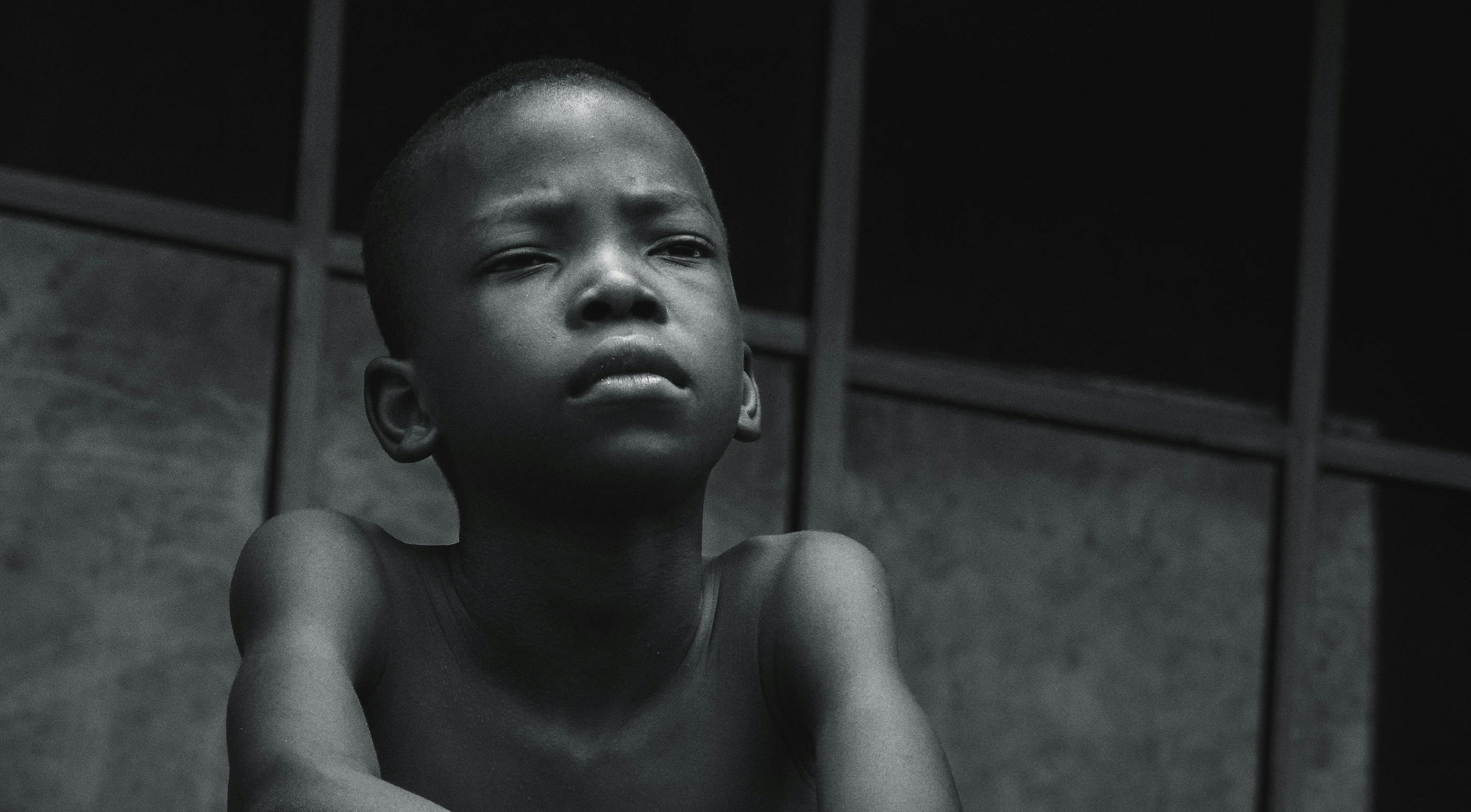
(for boys who became wild cards in the hands of terror)

Before the fire took the place of vowels in his mouth, He was a boy          memorising letters, & no one sees the boy he was before his name only afterglow of the sermons that carved terror into his breath.
              It began when someone  misread verses in a gathering of scholars, says a man must carry fire in his chest & learn early to swallow heat without remorse & this they claimed is the making of man:
           He walks through rooms with ash in his mouth & burns all his softness like incense: the laughter of his childhood, the tenderness of his name. At the sermon, the new preacher preaches about the rites & ascension from boyhood to manhood to the children learning the sacred alphabets.

After classes, he returns to the neighbourhood of his peers & reigns with the
manliness of his new identity by counting the terror tucked underneath his ribs & the firmness
of his fist on their chins.
He sits often by the quiet corner of his mind saying Astigfirullah to all
the years spent tending to the soft parts of himself.
For letting the softness cling to his skin like dusk melting into the arms of night.
                  Thirty minutes was all enough for the new preacher to mutilate the consciousness of a boy learning to morph into the softness of his beginnings. This is the making of a wild card for terror.
He no longer runs toward the laughter of his years.
He instead walks into the mouth of the world,
hummingbird caged in smoke teaching his wings how
                                                                         to flutter without making a sound.

Twenty years later, He still doesn't remember the years he spent believing in the gentleness of rain, in the way a mother’s voice folds a wound into sleep.

  Now, he learns to name silence in a deeper language,
where sorrow doesn’t flinch
                                                   &
                                                     every breath is a small defiance that comes with ransoms
& what else becomes of a boy who must unlearn the language of flowers? He carries silence the way a river carries the dead with resignation. He folds his laughter into fists,
                                    & teaches his shadow how to walk without trembling.
He does not know softness can be a form of strength.
That to weep is also to live.

                To be called a boy
                                                is to inherit both the fire & the ash.
Some nights,
                     in the dark, he gathers what remains of tenderness—the memory of softness calling him home asking to be renamed, asking to be reclaimed by the pull of innocence.
He writes his body anew, tracing old wounds with the patience of rain, learning to hold the mirror without flinching.
                                                  He learns to spread his doubts across the skins of time.

                             & other nights, water returns in his dreams—
how it once held him in its depths without trying to drown him. He wakes aching for the boy
                                who once danced in the garden of his name,
before the world carved silence into his throat.
                       He remembers how his name was spoken like a wound,
                                                                    &              all the ways the world asked
him to bury it.

The world is forcing a man out of a boy:
                                            He is writing his ways into the mouth of the wild verses where the imam said pain, not love,
                                                                 lives in his body.


Abubakr Ibrahim, aka Imam of Poets, is a Nigerian poet and abstract artist whose work explores identity, memory, grief, displacement, and heritage. He reflects on how individuals perceive themselves, how others perceive them, and how these dynamics shape everyday life. His poetry often engages with communal histories, imagination, and sometimes love, navigating the space between the personal and the historical. He co-authored In the Realm of Dreams, a cross-genre chapbook of poetry and art, with Jide Badmus (available for purchase on Amazon). In 2025, his poem The Only Elegy was shortlisted for the Akachi Chukwuemeka Prize for Literature. His poetry has been featured or is forthcoming in Arts Lounge, Art Muse Fair, Konya Shamsrumi, Iman Collective (The Muslim Writers Initiative), and elsewhere. He lives in Abuja and tweets @Imamofpoets.


You must be logged in to post a comment.