

SPOKEN WORD POETRY | 2024
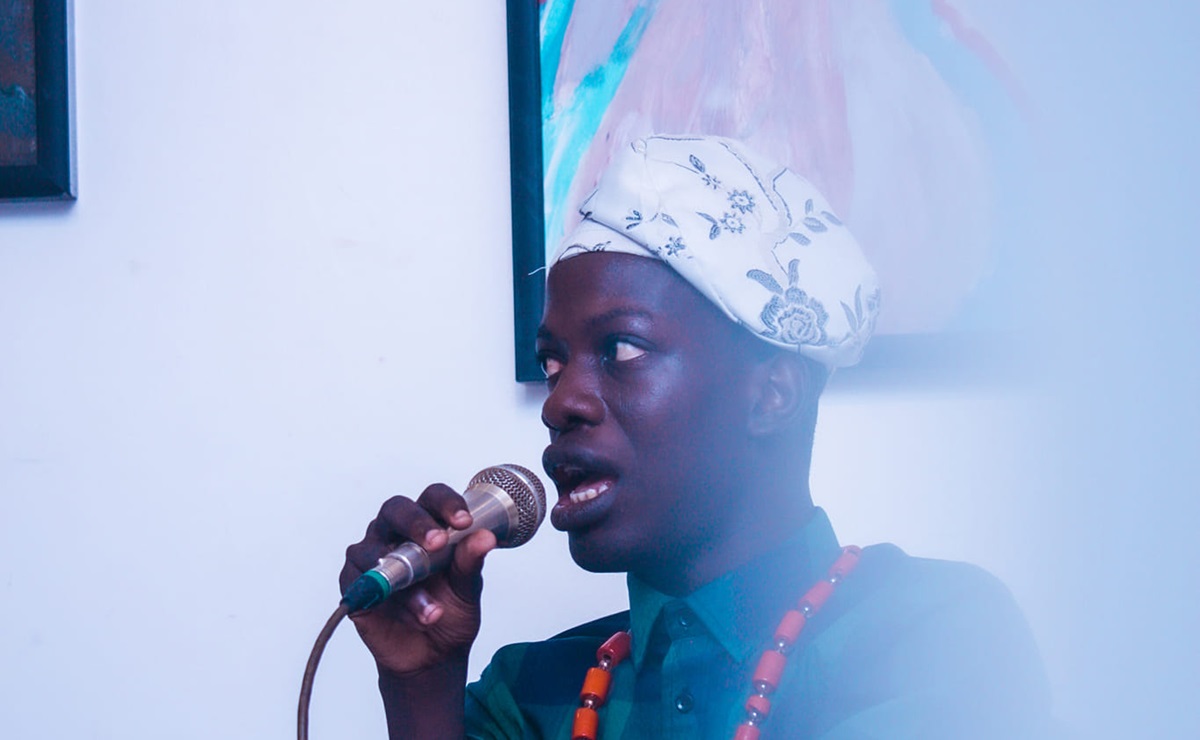
When I first listened to “ORÍ by Aremo Yusuf Balógun ‘Gemini’, I was reminded of the 2004 movie “Orí by the acclaimed Nollywood actor and producer Muyiwa Ademola (Authentic). It was a refreshing listen because I have long awaited a fresh exploration of culturally themed spoken word poetry, where African myths, legends, and histories are consistently represented alongside the prevailing influences of contemporary structures.
Orí in Yoruba is not just the “head”; it holds a profound meaning that extends beyond metaphysical interpretations of a person’s destiny, determinism, or fatalism. Yoruba philosophy embraces different strata of human existence, including beliefs in Orí (Human Destiny), Emi (Life-Giving Element), Ara (Body), and Ese (Leg). These beliefs are deeply rooted in tradition and history.
Orí is the element responsible for a person’s personality and represents human destiny. Also referring to that which is chosen–the individual destiny or portion, Orí is the personal spirit or guardian ancestor of an individual.
It is said that Ajala, a skilled potter but also a drunkard, debtor, and irresponsible being, is responsible for the creation of Orí. He moulds heads of varying shapes and qualities. Some are excellent, but many are flawed through his sheer negligence, every individual is required to select their own Orí (destiny) from the multitude stored in Ajala’s warehouse before entering the world. This myth is common and well-appreciated among the Yoruba people in Southwestern, Nigeria.
Gemini’s, ORÍ is unarguably rich and intense with culture. In this four hundred and twenty-two-word Spoken Word poem eulogizing the spirituality of human destiny, Gemini delved deep into the Ajala myth and surfaced it in the plainness of artistry.
It began with an acknowledgement of the spirituals:
There are gods
There are goddesses
There are genies
There are spirits
There’s Olodu to mare and there’s the super mystical.
It continued questioning the definition of Orí to the fatalist saying of “what will be will be” followed by the expression in Yoruba “Ise ti Kehinde ba se ni ile aye ti Taye ba danwon a ru igi oyin” meaning “what Kehinde will do on Earth if Taye attempts it, he will regret.”
Orí vocals the sacredness of Obatala, Ajala (the Potter), Witches, Iroko, Sango, Moremi, Esu and Olodumare, about the traditional philosophical and religious concept of reincarnation.
“Do not chase kosoko again instead pray that in her next life she pick an Orí that last for eternity; Abiku is not a curse oun gbogbo l’wo Orí. The Ipin of some humans outlive them but Orí refuse to be outlived and then comes Akudaya.”
Words like “Tibi tire la d’aye, the earth is a pendulum of life and death” turned my attention to the objectivist paradigm of the world. Orí is an apprehension to the response compels tied to human lives, their soft and hard determinism, success, achievement, poverty, struggle and a lot more.
ORÍ is a success, bringing attention to a long-present but less-celebrated genre of spoken word poetry in Nigeria. Although the audio and vocal quality could be better, the slow instrumental accompaniment adds a unique layer of enjoyment to the piece.
The poem could have been more distinct had it been entirely rendered in Yoruba, positioning it as a modern piece of Yoruba oral poetry. The code-switching between English and Yoruba created a somewhat jarring experience, affecting the seamless enjoyment of this unique art piece.
Overall, Yusuf Àlàbí Balógun has solidified his place as a commendable custodian of Yoruba oratory and culture through his compelling delivery of ORÍ spoken word poetry.


Tola Ijalusi, Founder of Parousia Magazine, is a writer, poet, and reviewer. His work appears in Sprinng, Africa in Dialogue, and other publications. He’s been featured in anthologies like Wreaths for a Wayfarer and Best New African Poets. He mentors writers in the Sprinng Writing Fellowship and is a recipient of the Poet in Nigeria (PIN) Excellence Award.


You must be logged in to post a comment.